Monday, December 1, 2008

Post (tofu) Turkey ramblings....

Hey all:

Hope you all had a great gobble gobble day. We are at the finish line of our semester, so get your sneakers on and start your final sprint towards the finish line!

Once again, I want to remind you all of your presentation on Wednesday night. For those of you who have been keeping your blogs all semester, I am really looking forward to hearing your presentations--remember, you only have five minutes, so be prepared to wow in only a short amount of time. Keep in mind the requirements and suggestions I posted in my other blog posts, but above all: BE CREATIVE!!!!!For those of you who have not been keeping your blogs throughout the semester, I suggest you take my option and write a paper instead of doing the presentation; you will get more point if you do (it well).

THIS IS OUR LAST CLASS, let's make it a good one!

I will not have office hours on Wednesday (I am taking part in a Professional Grant Development Workshop) at CUNY but if anyone wants to talk about their presentations, I will be in my office after my classes on Tuesday (circa 4:30). Stop by and we can chat.

ONWARD!

Monday, November 24, 2008

Your (SOON TO BE FANTASTIC) presentations

Hey all:


Okay, when I told you during midterms that you should think of it NOT as a test but rather as a "celebration of knowledge," I was afraid that some of you would have to see an eye doctor because you rolled your eyes so hard to the back of your head. But, and I am being serious here, I do not think that tests should be "gotcha's" as in, "You thought you were doing well in this class but "gotcha" you didn't know I would ask you this question (and then I would do a long evil laugh). Not my style. I really think that a Humanities class is about communal learning that allows you to take your own paths through the material helping you grow and mature as a critical thinker. Now I do expect you to do certain things--I expect you to read the material, to think through it and to come to class ready to talk through your ideas. In this class I also expected you to write three weekly blog posts that offered insights into the readings of that week but also some thoughts about your experiences and ideas about 21st century literature.

And many of you did a FANTASTIC job . Seriously. And so you should think about the presentation on Wednesday as a celebration, a coming out show that allows the rest of the class to see what you have been doing all semester.

Besides celebrating, there is an incentive to do a really good job. 10% of your final grade will be about this presentation. So take it seriously and do a good job. I want you all to do well in this class, so make sure you put forth your best effort here. There are TWO things you must do to do well on this presentation: 1)YOU MUST FOLLOW THE DIRECTIONS EXACTLY and 2)YOU MUST BE AS CREATIVE AND ENERGETIC AS YOU POSSIBLY CAN.

Here's what you must do:

******Before coming into class. I want you to write a two page summary of your experiences writing a blog. This can take any form that you want but you must have the following ingredients: a)your feelings at the beginning of the semester about blogs in general b)your feelings about your blog at the end of the semester c)the usefulness of blogs in a 21st century literature class d)something you found surprising when writing your blog this semester and e)something that you would have done differently with your blog if you had to do it again.

This needs to be uploaded onto your blog by the day of the presentation AND you must bring in a printed out copy to class to hand to me.


******The night of your presentation. You need to have a printed out sheet that has the following details: 1)Your name. 2)The name of your Blog with it's link. 3)The exact number of posts that you have done all semester. 4)Anything that you want to tell me to look for specifically in your blog. 5)The Phrase "Comments." So it looks like this:


**************

John Lennon

21st Century Literature Class http://21stcenturyliteratureclass.blogspot.com/

53 posts (as of November 24)

Dear Dr. Lennon: As you can see, while I did all of my posts the first three weeks of class and I think I did a really great job my last seven weeks of class, during three weeks at the end of September and the beginning of September I didn't do three posts every week. Things were crazy and, as I told you already, I was really sick with the flu. But as you can see, I made up for it the last few weeks posting five posts and responding to three other people.......


COMMENTS:


**************

This all goes on a piece of paper and you hand this in BEFORE you begin your presentation.

For your presentation, then, you will have five minutes to show us your blog and impress upon us what you have discovered while doing this blog over the course of the semester. How you do this is up to you but be professional and creative. Here are somethings that you want to make sure you do in this presentation:

1)You want to creative a narrative for your blog. Give us insight of what you thought about blogs in the beginning of the semester and at the end (be honest--if you hated blogs in the beginning and hated them at the end, tell us. But make sure you explain WHY). Be clear in your thoughts and detailed.
---Show us specific blog posts that will hep us visualize this narrative.

2)What did you learn about yourself when writing these blogs? (If the answer is, "I hate doing blogs," think harder. Did you learn that by writing these blogs it forced you to think about the literature three times a week in a concrete way? Did you realize that you started reading other people's blogs because you found yourself confused when you were doing the reading? Did you find that you became a lot more personal in your blogs than you thought you would? Did you find that while at first all you were writing about was the reading, you started connecting it to your everyday life in ways that you never thought about before? Be creative and thoughtful here).

3)What was your blog personality? Was it sarcastic? Funny? Serious? Angry? Forthcoming? Did you feel loose when writing or restricted? Did you just talk about the material or did you talk more about your life outside of the classroom? Does your blog personality fit your personality or do you find that it is somewhat different (i.e you are fairly quiet but your blog was opinionated and loud)?

4)Was there a blog that you followed and that you learned from? The blog that you would visit every week to see what s/he was doing? Why? What was it about that blog that made you want to read it?

5) What was your best blog post? What did you do really well here? Did you have any cool links that you think were surprising/ interesting? What was your worst blog post? The one that after you sent it you wish you hadn't? The one that you have thought about erasing? (You don't have to do both but again, be imaginative and creative here).

6)Any closing remarks on 21st century literature and its relationship to your blog?
**********
Again, you have five minutes and you want this presentation to be snappy, exciting and informative. You do NOT want to just go down the list of six questions and answer them one by one. Be creative! If your blog was an image, what would that image be? If your blog was an animal, what type of animal would it be? Have your links and images ready. Do you want to have music? Do you want to have powerpoint? Do you want to have video? Do you want to have another person collaborating with your presentation? Do you want to sing a song? Do you want to have anarchist cheerleaders (ala Nirvana's Smells like Teen Spirit video)? Again, it is up to you.

I will be in my office Tuesday and Wednesday. If you want to stop by those days and talk about your presentations and work through some ideas with me, feel free. But, also, help each other.

I am very much looking forward to your presentations. Do a good job and good luck!
!!!!!!HAVE A GREAT THANKSGIVING!!!!!

If your blogs have left something to be desired......

Hey all:


So I have been looking through your blogs again and I am really impressed by what many of you have been doing this semester. You have such good insight into the novels, you have built a community by commenting on each other blogs and you have infused your posts with your humor, personality and intelligence. Really superb and it has been a pleasure to read through them week in and week out. I hope that this large chunk of your work load this semester wasn't just "busy" work but that it helped you actively work out your thoughts in this class. I am very much looking forward to your presentations in class.


Some of you, however, really dropped the ball. I realize that you all have extremely busy lives and that work/kids/other classes/life issues/etc/etc all add to a week where time is limited. I get it (in fact I get it too well). But I made sure everyone in this class from the first day onward realized how much importance I was putting into your blogs. I talked about it every class, showed blogs in class, had time for you to work with other students in a class if you were having trouble with them, met with every single one of you to talk about your progress, etc..... So 30% of your final grade is your blog and you will have to just deal with this grade.

However, there is another 10% up for grabs in your presentation. And if you give a presentation in which you only have a handful of blogs and you don't really have anything to say about it, you will lose another 10%. And while you have been completely aware from day one that this was going to be the case, I want to give you another option so that you can redeem yourself and get a better grade. So instead of doing the presentation, I will give you an option of doing a paper instead.

In this paper, you need to take 4 texts that we have read so far in this class. Your job is to write a one page reaction to EACH one of these texts. In these reactions, you do not want to write whether you liked the text or not but rather you want to write, as specifically as you can, what the text was centrally about. After you have done this, I then want you to do a close reading of at least ONE section of the text and show how it is connected to this central idea. Each reaction MUST be at least a page and then upload the whole thing onto your blog AND bring in a hard copy to class on Wednesday (you must still come to our last class). This, then, will take the place of your presentation.

I would suggest if you did not put much effort into your blogs that you take this option.

Wednesday, November 19, 2008

House of Leaves Class Notes

Hey all (this is an aid to our class discussions):


I am really looking forward to talking about our book tonight--although, unlike other classes, I am sort of confused about how to do so. The nature of the book resists a logical format and I think most conversations will be circular and dip into all of these strange weird and convoluted discussions. Bring it on, I say! I'm willing to go where the class wants to go--the only thing I will not allow is for people to stay on the sidelines. Open the door and let's see what's in the darkness (okay, okay, I'll try to refrain from any more metaphoric hallway talk).


In fact, it's fairly easy to describe what this book is about. You all decided that House of Leaves is about:


"A HOUSE IS ONLY A PLACE TO KEEP YOUR THINGS LIKE YOUR FAVORITE VHS TAPES AND YOUR DOLLS' MINIATURE SHOES OR MAYBE A PLACE TO BURY STRANGERS OR MAYBE TO BURY YOURSELF IN A MAZE OF MATERIALISTIC, MULLETHEADED, COKE SNORTIN' WHORES WHO REFUSE TO ACKNOWLEDGE THE TRUTH BECAUSE REALITY FREAKS THEM OUT MORE THAN THEY WOULD ADMIT, NOT TO MENTION THEY CANT"


Okay, why did I do this? While, as Thomas said, it might sound like a drinking game, it was an attempt to show how this book is built upon readers interpretations. 8,000 blog posts have been posted to this "fan" site about HOL (see how cool this book is, it is referred to by its initials) and all of these weird wonderful and ridiculous posts about HOL and the Simpsons ; the amazing 5 1/2 inch margins that is connected to the 5 1/2 feet hallway or the music that you should listen to when reading HOL (btw, did you know that Danielewski's sister is Poe who wrote an album called Haunted meant to accompany the book? And that readers think, like me that you should actually listen to Godspeed You Black Emperor instead? Ah, but I digress).


In other words, this book does not stay inside the leaves of this book but expands with every reading. Well, you counter, doesn't that happen with every book? Yes, but HOL is the first book that I have read where this idea is built into the book so completely. It forces us to think about reader's reactions and you need others in order to fill out the dark spots of your understanding. This is a communal book meant to be shared and disseminated among groups of people. It was first written on the web and this seems wholly appropriate--work is put up and then altered and talked about and commented on and brought into all of these nooks and crannies. I went to a conference talk this past weekend about the future of academic writing when I was in Nashville and, crazy enough, the speaker was talking about the web--instead of the academic book--as being the site where academics will write their scholarly works that will be shared and discussed by others. There will be a lack of an author and instead authors. Go here to see her ideas. But this death of an author that postmodernists like to throw around at cocktail parties actually fits really nice here. Mark Z. Danielewski is the "author" of the book but isn't Johnny Truant, Zampano and The Editors (who, yes, are fictional but don't they take on a life of their own here--look how many people in class thought they were real people). And then how we have added in our posts that could be linked to discussion posts on HOL? It is a text that keeps generating more text (hmmm...sort of like an expandable hallway, huh?)................


Loved It/Hated It

This might be a good place to discuss your reactions to the novel. You didn't hold back in your posts and I want you to talk about here in class...here are just a few:

Loved it/Hated it

Thomas
•"I loved this book. Which is surprising because with an opening sentence like "this is not for you" comes off, in my eyes, as melodramatic and pretentious, everything that follows, from content to format, is just refreshing. In retrospect, such an opening is almost redeemed as the reader moves on. It has been a while since a book has told me to "take a deep breath" and essentially scare the shit out of myself by pretending to be in Johnny's shoes (pg. 26-27). What did it for me was the line, "find those pockets without sound," which echoed a Zen saying I heard and have loved since I was young, "It's the silence between the notes that makes the music." In this case, it was the silence between the train rattling, the baby crying, the iPod blaring next to me, the conductor over the sound speaker, the silence between all of these, that managed to scare me, even if it was a slight bit. You see, because the night following, cold and filled with a new suspicion thanks to the novel, proceeded to make me both laugh and pause to think about the novel. That's an effect that most books don't have on me. Not only am I thinking of a line from a favorite book, but I'm experiencing the mood of the line. Does that make sense? Well, that's how I know I loved this book. "

Kevin •"I approached this book as a challenge to overcome. As such, I couldn't bring myself to either love it or hate it. It was a reminder of a class I took in my senior year of high school, during which a teacher subject myself and my fellow students to Ulysses. It was scarring, and I received several headaches from reading it. However, I came to have an amount of respect for the author, which later became reverence.However, I cannot see myself falling for this new work like I did with Joyce. There is simply too goddamn much in here. I'd have to agree with Jessica on this point: you could easily devote an entire semester or a lot of time on the Internet to deciphering this book. (Incidentally, a lot of people have chosen the latter.) If I have any complaint at all, it's that we didn't have enough time to give this book the attention it deserves. I still don't hate it; it's too intriguing to hate. Jarhead, on the other hand."

Rich •"This book was absolutely, I don't want to say horrible, but it was extremely tedious and difficult to read. Overall I will have to say that I did not enjoy this book. The read was ridiculous because it was half story and half textbook. There was way too much lecture going on in this book that on two separate occasions I fell asleep reading, yet while reading Truant's part of the book, I did at times find myself interested but then he too would go off and have a five page metaphor on how he was feeling at that point and time. I can't take it anymore. This should have been a movie not a book and I don't want to read the psychoanalyzation of the freaking thing while I'm actually reading and trying to understand some messed up author's head nightmare. I can't even begin to explain what the hell is happening in the book but I can tell you that it is frustrating that we did not have class and could not discuss because I am truly lost and I think that is the largest factor of me not enjoying this thing..."

Matt
•"hate this book, present tense. For a long time now I have known that my reading comprehension leaves much to be desired. This book does its best job to make me feel even worse about my lack of skill in that department. For most of the works we have read this semester I have heard people discuss things or reference something that sounded foreign to me. I was forced to either ask someone or keep quiet about it to avoid feeling dumb. In the case of House of Leaves, I feel like that about a lot of things, maybe too many things. I'll admit that I did not enter this book with an open mind. How could I; it's the size of a textbook. All I can say is, when the supply of paper begins to dwindle along with the rest of the economy, we know who to blame."

Barry
•"The hatred comes during long passages of scientific BS like echoes (even though my favorite line/moment might be the last line of p.73) made even more annoying when Truant then points out after you've read the section how horrible it is and that he didn't want to include it blah, blah, bastard. All the fake article titles were funny the first two times maybe, but the 205th just pisses me off, because I still feel like I'm going to miss something if I don't look at it. Same thing with all the appendix and exhibit references. The "editors" even give you the choice of wanting to know more about Johnny's mom or not in a footnote - of course I feel I have to read it - then 45 minutes later I'm asking myself "Do I really want to decode this letter from his mother with the first letter of every word?" Of course not, its 3am, but what If this jackass author has hidden the whole meaning of this book in there, and he kinda seems like the type of jerkoff that would do something like that. Why the hell did I read those blue boxes - worthless! I definitely did not read more than 10 of the names/buildings. Why does everything have to be in French or Latin first if you are just going to translate it anyway? And could you please stop footnoting your footnoted footnotes that appear 5 pages in the future. I get the point - we are getting lost in this book, just like the hallway, but to be honest if it weren't required reading I would have probably stopped caring somewhere around page 45."


Form of the novel

Another idea that I think we need to discuss is the actual form of the novel. Let's start with the footnotes themselves. What do footnotes imply? Proof. We in academia always need to prove ourselves--our ideas, original as we may think they are, must still be connected to something true and tested. And as we can see in one of your assignments last week, there are plenty of footnotes that are true. But what about the ones that aren't. Do you then discount everything? Is the reverse true as well--you might as well just believe everything? Funny how this connected me to the election and the way that the candidates would say things and the next day there would be all these FACT CHECKS. And I would check sometimes...but why should I believe this website--who is funding the site? Is there word true? See, it keeps going and going......

****And what about the fact that the word House is blue all the time? What does this mean. One thing that has been discussed is that this was an original web text and so the house then could link to other things.....but I like Rob's idea better.

****What about the quirky format of the text? The boxes were mentioned by a few people (although right now I can't find the blog posts) and I like how one person mentioned about the actual containing of the text in a box is very strange and limiting (although we don't have this same problem with the "box" of the page itself).

****And of course, what about the blank space on the page? What does that do for us to look? Does it makes us want to fill it in (again making this a text of participation) or leaving it empty is a relief--finally a page that we can turn easily?

****Any thoughts about the font? Does the changing of the front reveal things about the individual characters?


WHAT IS THE HOUSE?


Another question that I asked from you all was for a video or picture of what you thought the house looked like. You did a fabulous job many of you and I want to talk about a few of them in class. Thom, Terrence, Barry, Matt; Jamie; Rich......(some video) Danaya;Terrence; Matt; Shanoa; Jessica; Kevin; Jamie and so many others that we are going to get into........


Questions?

I do at the end of this class want to make sure that we answer some of the larger issues/questions that you have so we can talk it through.....


•If the footnotes, in fact, are falsified, is what we're reading even truth?
•Why didn't anyone take a sledge-hammer and bashed down the wall on the side of the door to make sure that was the only way to get in. (or real for that matter)


•Did anyone else notice the checkmark in the bottom left corner of page 97? Why is that there? Did I miss something?
•Why does the story involving Minotaur have to do with the main story line? In connection to that, what is the main story line?


There are more than several biblical allusions in the text. On page XX of the introduction, Truant states that Zampanó, "knew from the get go that what's real or isn't real doesn't matter"... 1) Does anyone else agree that FAITH plays a major role in the text, i.e. Zampanó's FAITH in his scribes, Navidson's FAITH in his friends who are summoned to the house to investigate, Karen's alleged unFAITHFULNESS, our FAITH in the author and the veracity of this work?


Why does Karen choose to stay in a life that she seems to be unhappy with? Is it for the kids? For companionship? Or does she really just not see how unhappy she really is?

WHO ARE THESE PEOPLE?
I would like to do a character sketch of ecah one of these characters as I already asked you to do on your blogs. Who is Navidson, Johnny Truant, Zampano, Tom, Karen, Halloway, etc, etc.......

JUMPING IN
During the course of this class period, I would like us to go through this text randomly and just look at pages and try to figure out this novel non-linear. It worked for Burroughs, why not for us?


ODDS AND ENDS


Is this the picture of Delial here?


Listening to House of Leaves

http://markzdanielewski.info/media/5point5.HTML


The Idiot's Guide to The House of Leaves


Reading from HOL (Click on audio)


EXTRA CREDIT


Somehow, and I am not sure how, the semester has contracted and we no longer have many weeks. We have tonight and we have the week after Thanksgiving. That's all. And since our next class, I would like to spend the time having presentations about your semester long blogs, I want to give to you the opportunity to get extra credit for reading the rest of this novel. What you need to do for this extra credit (and the result will be that I will bump up your grade by a half or a whole--so if you were getting a c you would now get a C+ or a B-; if you were getting a B, you now get a B+ or an A-, etc, etc) is to a)Read the rest of the novel and B) write a long blog essay in which you talk about the transformation of a character. Here are the rules:

You need to talk about the character in the different stages of this book (If you were going to write about Johnny Truant then you need talk about him in the beginning, the middle and the end of the book. How has he changed? What has caused him to do the things that he has done? What are specific instances that he went through that are significant and why? But be imaginative--is the House a character?). You then need to have at least ten (10) relevant links that helps the reader understand the different stages that the character has gone through.

In order to do this well, I would think you would need to write the equivalent of 3-5 solid pages of strong text. This is due by December 8.

Friday, November 14, 2008

Nice job Read for next week 246-346

Hey all:

So here I am in Tennessee and I find myself skipping presentations to read your blogs on House of Leaves. Let me first say that although this is an extremely tough book to read and one that I think is specifically based on a challenge--are you willing to strip away everything you know about literature and come follow the author down this long, dark hall to nowhere particular?--many of you stepped up and faced this challenge head on. I would start listing specific posts but they are just too numerous.

At the beginning of this class I asked all of us to be intellectuals in a very practical sense--to challenge your concepts about what you know about literature, your self and your world view by asking tough questions and I see this willingness to do so in your posts. So keep up the good work. I virtual thumbs up to you all.

However, there were some of you who have dropped off the face of this class? Hopefully you didn't open any doors to oblivion. This might lead ala Navidson to some very long tough days. It will also lead to a bad grade in this class.

I will keep going back to your posts but for next week I want you from 246-346. For those of you who are having trouble (which is all of us) keep pushing through--there are even a few long jokes that are, in my opinion, laugh out loud funny. But think about the posts that you and your classmates have written as you read through the next section. I will not promise you that things will become clearer but the ride is a good one.

ONWARD!!!!

Wednesday, November 12, 2008

Virtual Class

[I wrote this message to you and sent it to your St Francis e-mail.)

So our virtual class is up and running.

Go to my blog--http://21stcenturyliteratureclass.blogspot.com/

and respond to my NINE (9) posts for this class. But be careful, follow the directions very carefully. Some ask you to respond to my post (you read the post and then press "comment" at the bottom and respond). Others ask you to go to your Web blog and respond there. Still others ask you to go to other people's blogs in the class and respond to their posts. Make sure you follow directions or you may lead yourself down hallways that never end.

Each post is an attempt to help you think about this book and in fact to do all of the things we were going to do in the traditional classroom setting. Our class normally lasts for three hours--and I expect that your work in these posts will take you a significant amount of time. While I doubt that it will take you three hours, if this only takes you 30 minutes, you are not doing the work you are being asked to do.

You have until 11:59 tonight to make your posts. Feel free to use St. Francis computers but you may also do these posts anywhere you would like.

IF YOU DO NOT SEE YOUR BLOG ON THE SIDE OF MY WEB PAGE, E-MAIL ME IMMEDIATELY WITH YOUR BLOG ADDRESS AND I WILL PUT IT UP.

GOOD LUCK!

questions

House of Leaves is obviously a tough book to read. Please use this space to ask questions. At least three. Press "comment" at the the end of this post and ask your questions.


They can be plot driven, "Does anyone know Delial is?" or "Wait a second, if Zampano is blind, how did he write this book?" to more abstract, "Is Johnny Truant and Navy really the same person?" or "Are the cameras just a rip off of The Real World confessional?"


Then I and the rest of your classmates will respond if we think we know the answer.


Please try to respond to at least three questions from your classmates throughout the night.


Let's help each other out----I'll get the fishing line and you get the radios. And we will beat Mr. Monster.


[if you didn't get those references, then you need to do more reading.

hated it/ loved it


this is not for you.


the first lines of this book. five words and plenty of space. A challenge. A pretentious gesture. a bad move by an author.


press comment to this blog post and i want to hear about what you thought about this book. loved it? hated it? found it boring. found it useful as a weapon to kill that fly that was buzzing around your ear? Let it all go. Get into your feelings. let it out.


at least two paragraphs. don't hold back.


but get at why you loved it, why you hated it. Try to be specific. If you found it boring, explain why you did (I don't like science). If you found it offensive, explain why (Did Truant have to write in such graphic details about his drug use?). If you loved it, explain as best as you can, why (because finally there was a book that made me actively engaged--all the other books in this class felt as if I didn't need to be there, the words were there dead on the page. But this book, i had to create it as I was reading...)

what does the house look like

HOUSES


R


Just


H


only when they are not.


Your job: what does the H look like? On your own blog under the title "HOUSE" I want you to post a picture or link to a picture. Then write a paragraph where you explain why you chose that particular image (since this is about a house that expands and contracts in a way that defies rationale thought, you might want to be a bit creative here). I then want you to find a paragraph in the book (or a couple of lines) that you quote that gave you the inspiration for your image.


Please then comment on TWO (2) other people's blog pictures.


realness

are any of the footnotes real?


find one footnote that is real and post it in the comment section of this blog post.


[here's the catch, you can NOT use any footnotes that your classmates have already found and posted here]

watching house(s)

Images.


you do not read this book.


You w a t c h it.


On your own blog under the heading "VIDEO" post or link a video that is a visual of The House of Leaves. You can be literal and post a blog of Mark Danielewski reading from his book or you could be figurative and find a clip that relates to the book in some way.


After you post it or link to it, then I want you to write a paragraph where you explain why you chose your video.


You then need to COMMENT to three other posts from your classmates.

Who is Karen or Navy or Reston or Holloway or Tom

who are these people that people the halls of this book?


If you last name starts with A-D you take Karen

If your last name starts with E-I you take Navy

If your last name starts with J-P you take Reston

If your last name starts with Q-U you take Holloway

If your last name starts V-Z you take Tom.


Find three passages from this book and give a character analysis of the person.


POST TO YOUR OWN BLOG POST UNDER THE HEADING "CHARACTER SKETCH"

5 words

I will not tell you what this book is about.


[truth be told, i don't know].


i am trying to figure it out

but everytime I do, the house leaves.

[get it]

if truth is always

m

o

v

i

n

g

and we can

never

p

i

n

it down

then let's figure it out together, shall we.


We will find the meaning of this by writing sentences together through the comment section of this blog post.

Here's how we will do it. In my comment section to this blog, I will write five words but I will not end the sentence. The next person who reads this will then copy my five words and add five more. The person after that will copy the ten words and then write five more

and on

and on

and on

and on

and on.


only five words at a time. building the hallway to get at _______________


When a House is not a House

THE HOUSE

is not a house.
It is much more.
It is a metaphor.


FOR WHAT?
In three paragraphs, I want you to decide what the house could stand for. Think this through. Please post this response on your own blog.
[check out my comment to this post for possible ideas]

go ahead, skip it

Johnny Truant writes, "The way I figure it, if there's something you find irksome--go ahead and skip it."


What is Mr. Truant implying about the book: If you only read the parts that you want and skip the parts that you don't care about, how will you get the whole story? Is he asking us to be lazy? Or does he know us better than we do and realize this is just what we were going to do anyway?


On your own blog under the title SKIP IT, write down the parts that you skipped when reading--and be honest. Did you read the first page and then just stop? did you read through the "main story" (whichever you think that is) and then just skip the rest? Did you switch back and forth.


write three-four paragraphs where you write down your experience reading this book. But do not write "I" or any first person. Have distance. Write about your self in the third person. Example: "After the second chapter, John Lennon could not read anymore of Johnny Truant's footnotes. They were so obviously sexist and boring and completely ridiculous. Mr. Lennon wanted to know about the hallways............"

Tuesday, November 11, 2008

VIRTUAL CLASS TOMORROW

Please see your campus e-mail for a full account but tomorrow you will have a virtual class instead on a regular class. Details to follow but a)you need to do the reading for tomorrow b)you do NOT need to be in class tomorrow (or St. Francis) and c)you need to have internet access tomorrow (various assignments will be due by 11:59 pm).

I will update this site tomorrow by noonish and give you all the details of how you will "talk" about this book with me and your fellow classmates.

This is a wild book that pushes the limit on our reading practices. Tomorrow's class, I hope, will push the limit of the way that we experience class as well.

See you all tomorrow and happy reading.

BLUE(S) House

Hey all:

KEEP PUSHING THROUGH IT! YOU may be wondering


WHY


things are all written funny.

AND
WHAT's
WITH
THE
FOOTNOTES?

WHYWHYWHYWHYWHYWHYWHYWHYWHYWHYWHYWHYWHYWHYWHYWHYWHYWHYWHYWHYWHYWHYWHYWHYWHYWHYWHYWHYWHYWHYWHYWHYWHYWHYWHYWHYWHY

Stick with it folks. Remember to remember how you are reading this book--not just what you are reading.

And that thing breathing on your neck is just the wind. only the wind.

Monday, November 10, 2008

House of Leaves

Jessica titled her post on House of Leaves as "complicated houses" and I think she's absolutely right. What a strange trip this book is! I have read and taught this book a few times in the past but this weekend when I hopped on the G train, I once again missed my stop because I was so enveloped in the book (the second time this has happened this semester). Crazy! Disturbing! Confusing! Weird! Smart! All words (shouted at you due to my exclamation points) that I would use to describe this book. But probably the best one is "experience."


Reading House of Leaves is a reading experience. No two of us will have the same experience as we read it--which footnotes did you examine? Which parts did you skip? Did you read The Three Attic Whalestone Institute Letters (pretty frightening--you were instructed to read it in a footnote and it's worth it)? Did anybody youtube clips of The Navidson Record (here's a good one)? Did you find yourself skipping through Zapanos parts and focus more on Johnny Truant's sections?


Obviously, you will not be able to read every footnote or every digression. This book is forcing you to think a bout your own reading strategies and comprehension. Jessica wondered in her post if this book makes sense in our current fast paced world and I think it does--it mimics our ability to read three different texts while texting a friend, listening to an ipod and surfing the web (do people even use the expression "surfing the web anymore? I'm getting so obsolete). Tom, for example, not only reads this monstrous book (pun intended) but is also reading Dave Eggers' A Heartbreaking Work of Staggering Genius and talks about them both here. In fact, as I am writing this post, I am currently writing a talk I am giving in Tennessee, signing up to be a test subject for a research group (Focus Point gives out money to be test subjects to review products and tv shows) and clicking on Amazon to see if the New Guns N Roses album is out yet (okay, okay, I'm joking on that one). That's what I love about this book--it becomes about the reader experiencing this very weird and disturbing story about a hallway that begins to expand.


And let me tell you, for some reason, this is frightening to me. Try reading this book late at night in the glare of a flickering tv screen as everyone else in your apartment is asleep--creeks begin to to on a whole new meaning.


But I also admit that it is a long complicated one as Peter mentions a few times in his post. And I also don't make any apologies for this. It will take you awhile to read this book and I also realize that many of you also may not enjoy this book as much as some of the others. But stick with it. Keep pushing forward through it and keep reading; there is so much to talk about. But if you come to class NOt having read this book, if you think the house is red and not blue, if you don't know that Johnny Truant works in a tattoo parlor or that he is in love with a girl named Thumper, if you do not know that Zampano is blind, if you saw a footnote on page one and put the book down, then you are really not doing what a LITERATURE class demands you to do--to read and think about literature in all of its complicated ways.


So keep going! But always keep one eye behind you, you never know what is creeping up when you are not looking.


......not sure but I think we have to do something in our discussion that reflects the nature of this book....I'll think of something......

Wednesday, November 5, 2008

Class today--reading smiles, reading graffiti

Hey all:


Okay let's get right into it: a smiling American woman standing over the dead body of Manadel al-Jamadi.


The photograph, taken by a man who would also appear with his thumb up, is damning evidence. Horrific evidence. These are the images that stick with me when I think of Abu Graib. The photos that rocked many of us sitting in our comfy seats in America and raised many questions that echoed questions raised during the My Lai massacre--how could American soldiers do this? In fact, if you read through my blog, I actually forgot that this article by Erol Morris was about Sabrina Harman and instead I thought it was about Lyndee England because she became the face of the scenes that unfolded in this prison. Amazing how the mind works like that.


But let';s get back to the photo--here is a woman giving the thumbs up sign over a dead body. The immediate response (and here I am paraphrasing the article) is e a to feel horrified by the image and to put the blame on the woman doing the smiling. How could someone do this? She must be a "bad apple"; a rogue soldier who probably has mental issues. The army needs to court martial her (which they tried to do) and get rid of her. Strip her of her rank and privileges. She is a black mark on the name of the army.


Hold on, says Errol Morris. Wait a second--did you look at the photo? The photo shows a smiling woman, yes, but what it actually shows is a murder as well (and here, I suspect, some of you may question Morris's assumptions)? The smile was perfunctory--she did not mean it and Morris then pulls out all the stops; let's look at the "evidence" and has intelligent men who spend their whole lives investigating smiles (how do you get that gig?) saying without a shadow of a doubt that Harman wasn't smiling out of enjoyment but was actually smiling because this was what you are supposed to do when taking a picture. In fact, Harman was not happy but was disgusted by the death of the prisoner as well as (and this is the way I read it) that she was lied to by her commanding officers. And so the photos, which broke the whole case open, is more about what happened to al-Jamadi before the photos were taken instead of the actual photos.


And so Morris, in what I think is a well documented case, tries to find out what happens. And as he sifts through all this material, he says the government is "guilty" of fuzzing it up; meaning, there is so much information that the truth is buried in the mounds of paperwork. There is no "answer"; no "truth" and so he returns back to what he can find out and that is the photograph. And he says that the reason why it is so disturbing is NOT the dead body per se but the fact that she is smiling is what makes it horrific--a combination of disgust and terror. When we see her smile, we also want to smile (it's automatic) but when we see the dead man we recoil in horror; and therefore put the blame on her instead of the people who killed him.


But all of this article which I hope we talk about in some detail today is connected to this issue of torture--which is of course what we talked about last week and what I feel is the undercurrent behind THE PILLOWMAN in the first place. But what is torture? Let's define this in class. And what does a storyteller have to do with the whole thing--how do stories, in fact, offer more resistance to a totalitarian government than the actual murders as well? Let's get into this as well.


Here are some film clips from Standard Operating Procedure, the documentary that Errol Morris did in connection with this Op-ed piece.


Megan Graner


U.S. Soldier


Sabrina Harman


Okay, after we talk about this article, I then want to move the discussion to the way that you read this piece. I want to hear your discussion of your reading practices. Did you click on the footnotes? Did you read some of the excerpts? Did you read where the clicks took you? This is important; I really want us to be more conscious of the way we read.


Then I would like to move to Graffiti. Time is running out before class so I want to just load some pictures up and then we can talk about in in class.....

Tuesday, November 4, 2008

Readings for the week

Hey all:

Seeing the lack of activity out there in blogland, I think many of you, like me, are taking this day to catch up on work. Whew! This semester has been a tough one, no? I feel like it should be the end of the semester already....well, actually, we are not too far from it. Only a few more weeks, actually. So please keep the pedal to the medal and let's move forward in the last couple weeks of the course--keep up your excellent comments in class as well as your thoughtful reflections in your blogs. Keep going!!!!

I also would like to know what you thought of the readings for the week--I think the Errol Morris, while difficult, really adds to our discussion of reading people and their actions--how does a smile reflect the inner workings of an individual? Is a seemingly obvious facial reaction not so easy to read? And then, this is the interesting move, how does this relate to our class discussion of the word torture (And yes, we will need to define the word together tomorrow night)? Can we extract "truth" from individuals if we are having such a hard time trying to read what a smile is all about?

Then, this move to graffiti. Full disclosure--I'm interested in this subject and I have spent this past summer really thinking about what it means in the 21st century when technology is everywhere to take a marker and write your name on a building. What's the point? Is it vandalism? Is it resistance? Does it speak to some of the larger issues that we have brought up in this class. I was trying to come up with a reading that would give a basic introduction to it but, honestly, everything I have ever read is either too theoretical or too basic (or way too long--chapters of books, whole books, etc). So I thought I would give you something that I am currently writing (kind of a long Blog piece) that I hope does a good job at least getting you to know the basic history of graffiti in New York City and then also to get to know two graf writers and how they "mean" different things depending on how you read the names or works on the walls. This is far from a perfect piece and there are many issues in what I wrote that I am still working though--so please feel free to come with both guns blazing and disagree.

Finally, I did want to tell you that I have purposely left this class with no ending because I wanted to see the personality of the class and see what you all would be interetsed in and would be willing to do. I have been pleased with your willingness to go out on a limb and to take chances with your readings--so I have decided that the next two weeks we will read an absolutely AMAZING book entitled, House of Leaves. To say this is a weird novel is an understatement. But it is also a novel that perfectly incorporates many of the themes that we are speaking about--and also really deals with the way that literature is physically changing on the page. The story is somewhat simple: a normal looking house is expanding from the inside. Crazy, huh? Silly, maybe? But I will say this, it is a creepy book that will keep you reading and then thinking long past the time you put this book down.

I ordered the book and it will be in our bookstore by Thursday but you can also get it in any Barnes and Noble or Borders store (or used bookstores should have a copy as well).

Take care!

Friday, October 31, 2008

Happy Halloween!!!!!!

Happy Halloween!

(i stole these jokes)

Q. What do goblins and ghosts drink when they're hot and thirsty on Halloween? A. Ghoul-aid!!!
Q. What is a Mummie's favorite type of music? A. Wrap!!!!!
Q. What's a monster's favorite bean? A. A human bean.
Q. Where does a ghost go on Saturday night? A. Anywhere where he can boo-gie.
Q. What did the skeleton say to the vampire? A. You suck.
Q. Why did the ghost go into the bar? A. For the Boos.
Q. Why was the girl afraid of the vampire? A. He was all bite and no bark.
Q. Why did the game warden arrest the ghost? A. He didn't have a haunting license.
Q. Why didn't the skeleton dance at the party? A. He had no body to dance with.
Q. Where does Count Dracula usually eat his lunch? A. At the casketeria.

Thursday, October 30, 2008

Wednesday, October 29, 2008

Readings for next week

Hey all:


Just a reminder that we will read and talk about The Pillowman next week and then move onto questions about stories created by and about graffiti.

Please see the External links page for the readings. The first reading will be an op-ed piece in the New York Times by Errol Morris who wrote (in my opinion) a fascinating analysis of a smile by Lynndie England who was part of the proceedings that happened in Abu Graib. In my opinion, The Pillowman raises many questions about the legality and the usefulness/uselessness of torture. Like everything else, it is a puzzle with no solution--we, the reader, need to figure out if the torture is (ever) justified. In the Morris piece, he does a wonderful reading of a smile and tries to understand if England is actually happy torturing these prisoners or if we cannot even trust our eyes in the photo. Please read/print it out and we will discuss it on Wednesday.

This will be our transition into our analysis of the story of graffiti. In the 21st century, writing is entering the virtual in leaps and bounds and technology is changing the way we write and read literature. But next week, we are going to analyze one of the oldest forms of writing known to mankind--graffiti. But this (illegal) practice has also been updated and the way we read graffiti is no longer just on the walls of our neighborhoods but virtually as well. So, for next week, I would like you to read an article that I am writing for an online journal entitled, “Bombing” Brooklyn: Graffiti, Language and Gentrification." It is a rough piece and still needs a lot of work but I think it is an introduction to graffiti (at least NYC graffiti) and also hits this idea about how graffiti is currently being transformed and used in ways that is very different from the way that it was intended. Please print this out and we will begin our conversations about this piece but hopefully we will get more into your ideas about writing and technology in the classroom.

I am flying tomorrow to Chicago for a conference and I will not be back until Monday. I will probably not have much access to the computer so I will not be updating my blog. But please continue to write and think through the meaning(s) of The Pillowman. Next week, I will also send you some graffiti clips that I want you to watch as well, so please keep looking at my blog for updates.

Good luck and take care!

Thoughts about The Pillowman (Part IV)

Hey all:

Some more thoughts about Martin McDonagh play.......I have been excited by your reactions so far to this play--some say that this is the most enjoyable work that you have read so far in this class. Okay, so you like plays about child murderers. No judgement here.

Act Two Scene Two
"The Little Jesus" story is another horrific, somewhat (darkly) humorous play in which a little child believes that she is Jesus and desires to go through all of the torture that the historical Jesus went through. Why is this story here? How does this have to do anything with the play? Is it just, and sorry Rob who in your post seems to be a devoted follower of the series, just like Saw or Nightmare on Elm Street or any other typical slasher film--the story is just here to show how cool a gruesome murder is? And is McDonagh just raising the stakes a bit by having the main character to be a little girl (and therefore our sympathies are prodded)?  Why does this story go right after Katurian kills his brother? Sure, it is part of the plot but why act it out?
Well, let's look at the story--in the end after all the suffering, the little girl still has belief that her torture will lead to something (a new world order which the rise of Christianity brought to the world)? And she is determined to suffer and go through it all (almost enjoying it to a certain extent). But the ending, with the scratching and clawing of the coffin shows that there is no resurrection, that the rising of the girl will not happen and the girl began to lose faith at the end and didn't trust that she was the actual Christ.  Hmm....so is this a bleak story? (um, yeah, duh.) But is there any hope in this story at all? Well, yes, there is. The real girl, Maria, wasn't the little Jesus but was actually covered in green paint and allowed to play with piglets (I know, this is a strange play). So the one story that Katurain writes that doesn't end in murder is the final story that the brother acts out. 

Why? I was happy reading this and to not see another child dead on the page (call me sentimental). But how does this fit into the greater question of the power of stories? Do bad stories in which there is death and destruction affect people to go out and act them out? In other words, do violent video games, for example, cause children to bring guns into schools and shoot people? Do nice stories cause people to do nice things?

Or is it all how you read them? The Pillowman story is actually a "nice" story to Tupolski because it allows him to get comfort when thinking about the death of his own child. It is a disturbing story to others, however, and would probably be banned from various media outlets as being dangerous. Does this play enter into a conversation, then, about the role of censorship in our society (or a totalitarian state). Do words kill? Should words be seen as dangerous as a person wielding a gun? Should we burn the stories that could lead people to harm others? Where do we draw the line?

I'm running now to get to one of the ten meetings I have today, so I have to go, but I really hope that we can sit around and talk about these large issues......see you later!   

Monday, October 27, 2008

Thoughts about The Pillowman (Part III)

some thoughts (continued).....

Act One Scene Two is a graphic and harrowing story about parent's setting up an evil experiment to see what type of literature a "loved" boy could produce while listening, for seven years, to the torture of another child in an adjacent room. Apparently, the result is that green pig stories get displaced by stories about razors in apples (if you read the play, you'll understand this last line).

And while in class, I do want to get into the story and hear your thoughts, I wish here to go back to my idea that I wrote previously about this play being a metaphor for a nation torturing its citizens (or enemy combatants) for the greater good of the nation as a whole. And I want to connect it to a question that you raised a few weeks ago--why so many stories about war and/or 9/11? Well, what type of stories are written by writers in the 21st century as smoke rises from the ashes of the world trade center or Larry King is talking about the U.S. military using water torture to extract information from suspected terrorists. What about us? When we overhear these conversations as we flip through the channels or watch SNL or John Stewart or read abstracts from newspaper articles--do these stories affect us as people? Does the fact that we know that people have been tortured or we see photos of American soldiers doing unspeakable acts in the name of our country affect the stories that we tell? Are we Katurain, living a nice life with luxuries (cell phones, new clothes, trips to the theater, dinner out) but we are still getting affected by it on another level?

Act Two Scene One The Pillowman Story

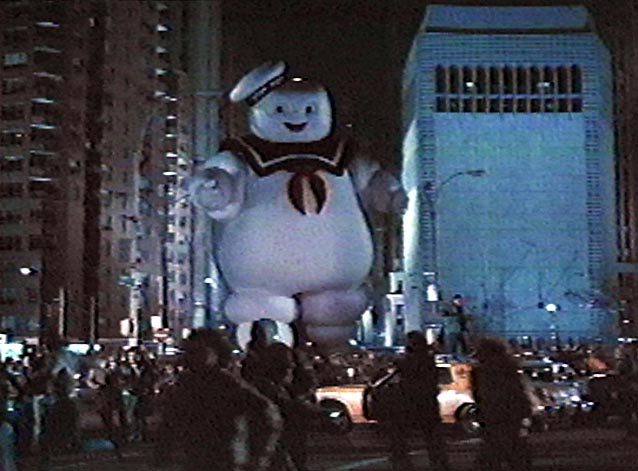
Okay, if truth be told, when reading this story I can't get the image of the the scene in ghostbusters where they fry the State Marshmallow Man. Anybody see ghostbuters? (on three, "who you goin' to call?"). But of course, in this play, the Pillowman is a lot more (deadly) serious. The Pillowman kills children before they begin leading horrible lives as adults. Again, it's this highly imaginative, in my opinion, fascinating story that gets me each time I read it. But as a metaphor, what does it mean? Is the Pillowman doing a tough but needed job--a person who can no longer live with the memories of molestation that happened to her when she was young, kills herself at 45 because her life has been awful and full of pain--well, here comes the Pilloman to save her before she becomes sad and abused. Objectively, is this a good thing (and this of course could lead to a three hour conversation). But if we table this discussion, could we maybe ask a question that I remember reading in a Stephen King book a long time ago that has stayed with me to this day--if you could go back in time and kill Hitler as a small child before he became the head of a state that killed millions of Jews, gypsies and homosexuals, would you do it? Would you be able to go back and kill a child? If we take this to a State level--what if we could find out who the eventual terrorists would be that would plant a dirty bomb in our streets? Would we be justified in arresting them now? Or, what if we believe that a state will attack us soon with nuclear or chemical weapons, would we be justified to order a pre-emptive strike? A country that has weapons that could eventually destroy us and blow us to smithereens is therefore always in the process of attacking us and therefore we are not actually attacking but defending ourselves when we invade another country?

These are of course really large questions here that I think the text, through the use of stories, is helping us think about and forcing us to question.

Good luck with the reading and I will write again........

Friday, October 24, 2008

Thoughts about The Pillowman (Part II)

Hey all:

So I have your midterms next to me and I will begin grading them shortly. Before I do, though, I do want to say that I have been impressed by the conversations that we have been having in class so far. I realize that the material that we have had so far has not been easy--and I make no apologies for this. As I stated on my syllabus, I expect us all to be intellectuals and to work through material that we may not like, may find tough, and that may find confusing. The goal of the first part of the semester was to read material that will make us think and see our post war(s) world a little bit differently. I know that I have a new understanding after listening to your comments about these texts, after seeing Blackwatch on stage, after reading your posts (so thank you). And I hope you do as well.

The second part of the semester, I hope, will be just as challenging as well as rewarding. Keep up the good work and keep fighting through these texts and bring your energy and intelligence to your posts as well as our discussions.

But now onto THE PILLOWMAN. Reading through the comments on various listserves about the play, a few words keep popping up--"brilliant" and "frightening." Well, after leaving the exam on Wednesday and hopping onto the G train to head home, I completely missed my stop because I was so wrapped up in this play. So, yeah, I agree--I think it is brilliant and frightening at the same time. But, it is also a play in which "the meaning" is just out of reach and no matter how much I stretch, it stays a fingertip away. You might find the same thing when you read. So what I will try to do a few times before our class meeting is to mention some large themes/ideas that I see and hopefully raise some interesting questions that could help you think with this material.

THE WORLD OF STORIES
Martin McDonagh is a playwright who, first and foremost, is a storyteller. He's the type of guy that you would picture in a small outoftheway pub in Ireland, sitting before a half drunk glass of Guiness and a warm peat fire, who suddenly clears his throat and two hours later after telling a fantastical story that seemed to just dance off his tongue, clears his throat again and stares at his beer never to say another word. A guy who contains many histories inside him and, given the right moment, will tell you things that you don't want to know but can't ever imagine getting up and just walking away. STORIES. The Pillowman, first and foremost, is a play that contemplates the art and nature of stories.

What does a good story do? A story contains a self-contained world that envelopes the reader/listener in a way that while s/he may feel the chair underneath her/him, there is a disconnect with the ordinary world and s/he enters completely and wholeheartedly into the world that is being created. It happens occasionally. The theater is a good place--the lights go down and the actors are mimicking opening letters (ala Blackwatch) and you know they are just actors but suddenly that doesn't matter and you are brought into the world of the fighters in Iraq. Or, for me for example, when I watched Children of Men and I forgot completely that there was anyone in the theater. Or...you get my meaning.

But a good story is not just about what it does to you in the moment of the telling. This is entertainment. Nothing wrong with that, of course, but a story must reach beyond the world it created and enter into our world. And that is what I think McDonagh does so well. I agree with Tupolski that all the stories within The Pillowman are "pointers" (17) and that they are trying to tell us something. But what are they pointing to?

Let's take the first story, "The Three Gibbet Crossroads" (17-18) where a man wakes up in a gibbet, knows he did something wrong, but doesn't know what. His crime is on a placard above the cage and so he cannot see what he did wrong. People pass by and everyone who sees him is disgusted by him (two other prisoners--a rapist and a murderer are forgiven by the passerbys) and eventually one even kills the man. Before he dies, the man wants to know if he will go to hell but he is just laughed at as his life drains from him.

Katurain says that this story is a great story because it is a puzzle without a solution.

Okay, so what do we do with this? Well, one, we look at the story aesthetically and, yeah, it's a good story. It gave me a few chills and will probably keep me up tonight. But on another level, I do think it's pointing to something as well. But what? Well, why is this guy in prison in the first place---because he did something horrible and is punished for it. But do we know this for sure? We, the audience, don't know his crime--or if he did anything at all. And the people--the nuns, the highway man--are disgusted by what the sign says. But did they see him do the crime (whatever crime it is)? No. All we know is that there is some power that was able to arrest, try and convict the man without any say on his part. He had no power of attorney, he had no defense, hell, he doesn't even know what he did. But as his life is spilling from him, he is convinced that he did something wrong and wonders about his eternal soul.........this sounds to me as a metaphor for a prison system in a State where people have no rights. A prison system where people are arrested without formal charges and are not given a chance to defend themselves. They are outside the law and therefore are not even able to get sympathy from passerbys. They are convicted and therefore seen as ultimate danger to the State and its subjects and therefore they have to be locked up and sent away (in this case forever).

Does this sound like anything we know? Is this story, a puzzle with no solution, actually pointing to our current post 9/11 world where governments have places outside of the law where, for the safety of the State's subjects, they are outside of all normal laws and legal processes? A place like Guantanamo Bay perhaps?

Is this play really a frank and brutal story about a world where governments are sanctioned to torture in order to protect? A play about what happens when laws are pushed aside for "national security?"

Maybe, maybe not, but as you read this play, think about what all of these stories point to? Who are the defenseless children in these stories? What do the two brothers represent? How is torture used in this story?

Anyway, that's probably too much for one sitting. I'll stop here. But I'll try to get some more ideas out here on my blog tomorrow.......

Thursday, October 23, 2008

Some initial thoughts about The Pillowman

Hey all:

Okay, so we are moving away from memoirs and plays and graphic novels about war and instead we are moving to . . . a play about child murderers?!?!

Yes, The Pillowman is about two brothers who are being accused and interrogated by two policemen for the gruesome murders of two children and the disappearence of the third. It seems as if one brother is a writer and many of his stories deal with kids who get killed...in many of the same ways that actual kids get killed.

So part of the pleasure (and yes, I say pleasure) of reading this play is to try to figure out if the brothers did it or not. And the play (in my opinion) is so well written that there are moments where I just want to put the book down in horror but many others where I actually laugh at a really funny line or forget about the play entirely and just get lost in the actual story that one of the characters recite. Again, not an easy read at all but a very interesting one.

But, and maybe more than any other work that we have read before, this is NOT a play that you can just read for plot or the surface meaning. Katurain (one of the brothers) says, "the first duty of a storyteller is to tell a story" (7), and Martin McDonagh certainly has told a whopper of one. But Tupolski (a detective) wants to know what these stories represent.

And that is our job as readers. What are these stories about--yes, they are about child murders but what do they represent? How are the issues in the stories related to issues in our current political climate?

In the next few days, I'll keep posting some of my ideas that may or may not help you work through this text. BUT YOU NEED TO PUSH YOURSELF. Don't be content to just listen (horrified) by the stories that are told but rather, always take a step back and wonder what large issues are being brought up.

Good luck and I look forward to hearing your thoughts next class.

Take care.

Wednesday, October 22, 2008

Reading for next week; what to do if you didn't go to BLACK WATCH

Hey all:

After much consideration, I feel it is important to read Martin McDonagh's brilliantly haunting play THE PILLOWMAN. I was going to wait a few weeks but after much consideration, I think it will work next week for a variety of reasons. First, we haven't met as a class for awhile. Tonight is the midterm, last week was the play and the week before that was a class on Black Watch which many of you skipped. That's the major problem for a night class--cohesiveness. So, I would like to spend next week with a meaty text that we will be able to sit down and dissect togteher as a class. (In our next classes, you will be finding many of your own texts and dissecting them in groups). The Pillowman is a harsh, weighty and suspenseful look at the art and consequences of creating stories in a world that has gone a little bit haywire. It's not a long play but please give yourself the time to read and think about it. It is not an easy play to digest so please get your thoughts about it on your blogs.

After this, we will then get into different types of texts (graffiti, new media, film etc) so let's all roll up our sleeves and get to work!

For those of you who did not attend the performance of Black Watch, I would like you to write a three page essay answering the following question:

Find a specific difference between the print version of Shooting War and the on-line version of the book found here. Your essay should identify this difference and then give a detailed analysis of why you think that the two versions are different in this area. You may bring in outside information or our other texts in this class to help back up your point.

!!!Midterm tonight!!!

Ah, only a few hours away from your celebration of knowledge, also known as our midterm. Good luck and I hope you all do well.

You will have two hours to do the exam. Please bring in many sheets of paper because you will be doing a lot of writing.

Take care!

Tuesday, October 14, 2008

BLOGS FOR THE NEXT WEEK

Hey All:

While you are more than welcome to write them, you are not required to write blogs for this week. There are no readings and therefore there is not anything that I specifically want you to discuss.

However, I do suggest that you use this space as a way to study for your exam next week. Post questions and ideas and I and your classmates will respond to them. If you write an essay, for example, I would be happy to give you advice on your essay and maybe point you in directions that could help you when it comes to actually write in in class. Classmates could suggest passages for you to read over. SO MAKE THIS YOU SPACE and use it to help yourselves.

Also, I would love to hear from those of you who go see BLACKWATCH. Please put up your ideas--especially compared to your reading of the play.

So again, writing this week is purely voluntary but I will be checking in periodically and would be happy to read your thoughts.

Take care.

Friday, October 10, 2008

Preparing for our midterm exam

Hey all:

Okay, so you are all getting ready for our midterm exam. In this post let me give you some hints to prepare for the exam--the type of questions you will get and how you should answer them.

First of all, I want you to think of the midterm as (a-hem) a "celebration of knowledge." Okay, are you still with me? I'm serious--if you have done the reading, if you have been putting yourself in our class discussions, if you are taking the time to think through the readings in your posts then this exam is a way for you to stand tall and say, "Look what I know!"

Of course, no one really believes me when I say this (and I probably wouldn't either). But I do want you to think of this as a way to show me (and yourself) what you know...we have read challenging, tough (and depressing) texts--you have been making smart links in your posts and in classes--now do so in your exam!

OKAY, let's get to the exam itself:
IF YOU WANT TO DO WELL, YOU NEED TO KEEP ONE WORD IN MIND AT ALL TIMES--SPECIFICITY. You need to be specific at all times and all essay answers to questions, to receive credit, needs to be specific in their answers. No, "War is hell" or "It's tough to fight in war" or "these books are about how devastating war can be." These are cliches or general responses--always respond with a specific scene or specific issue that you can back up with textual analysis. Get it? Anyone can read the back of these books and get the gist of what they are about--your job is to actually have thought through these books and their issues and have some solid understanding of them.

Here's the exam format:
1st section--Short answers
I will have a bunch of words and phrases and you need to explain where this word or phrase comes from AND its meaning in the book. Here are a couple of ideas:

American Apparel
Sniper
Sand
Any GI letter

Your job is to identify the word from one of the novels/plays and then give a specific meaning of it. So if you chose "sand" for example you would want to write, "Sand is a common object in Anthony Swofford's Jarhead. Sand surrounds the soldiers and disturbs them; as Swofford says again and again it fills every crack and hole in his body. Sand represents the sameness and danger of the war--it is monotonous and the scenery never changes but it also has the possibility of containing death at any moment." You see how I answered that--1st sentence gives where the word comes from. Second sentence relates it to the book. Third sentence gives an analysis of the word.

2nd section: I like small essay questions about specific moments in the books or plays that we read. You will need a two solid paragraphs to answer these questions. So for example, I might ask:

While the Wall of Shame in Jarhead deals specifically with the sexual infidelity of loved ones back home, what else does this wall of shame represent?
I like this type of question because it allows you to answer the question in many different ways but you need to answer these questions with direct references to the text. If you want to say that the wall of shame represents the fear that soldiers feel about being forgotten in a place where they are changing very drastically, then I would connect it to Swofford writing letters to his Japanese girlfriend and explaining that he wishes he could pour himself in the letter and send himself, sand grain by sand grain, to a person who knew him before he was in the war--when he wasn't the trained killer that he became. See what I did? I answered the question with a statement and then mentioned a direct reference from the text.

Here's the thing: I want to give you the chance to develop your own thoughts and bring your ideas into these questions (yes, the celebration part again). But these questions also allow people who have not read or read carefully to take a stab in the dark and just write generally in hopes that they get close to the answer. The way I guard against this type of essay is to have you write directly about the text. If you don't know the text, you will not be able to answer these questions well. Taking a stab in the dark will not help--you either know these books or you don't.

3rd Part-Large essay
Finally, I will ask you one large essay question in which you will have to write about a specific idea that we discussed in class and connect it to the texts we have read so far. The topic will be large "Media" "Gender issues" "Fear of Obsolescence" etc; your job is to be able to answer these questions specifically and with textual analysis (I know I am repeating myself--I hope you are getting the point.

*******
So be prepared to be here for a good two hours taking this exam--you will be writing a lot of essays where you will be able to show how much you know. You will NOT be able to take the texts into class but you may take ONE 8 X11 sheet of paper (one side) where you can put any notes that you wish. I would suggest placing names down and many short descriptions of scenes that could help you with some of these essays.

********
Finally, for your posts for this week, this is what I suggest--you write possible exam questions and answer them. As I read through your posts, I might offer some suggestions in answering those questions and I might also pick up some ideas in the exam questions themselves (in other words, if it's a good word or question, I might use them). You will also be helping each other--offer suggestions about answers or comment on what a fellow student wrote--this discussion might help you come up with some good answers for these questions.

********
Oh, one more study idea--read through the posts that I and your fellow classmates have left--I have been reading them and I will use their ideas in the exam questions as well.

GOOD LUCK!!!!!