some thoughts (continued).....
Act One Scene Two is a graphic and harrowing story about parent's setting up an evil experiment to see what type of literature a "loved" boy could produce while listening, for seven years, to the torture of another child in an adjacent room. Apparently, the result is that green pig stories get displaced by stories about razors in apples (if you read the play, you'll understand this last line).
And while in class, I do want to get into the story and hear your thoughts, I wish here to go back to my idea that I wrote previously about this play being a metaphor for a nation torturing its citizens (or enemy combatants) for the greater good of the nation as a whole. And I want to connect it to a question that you raised a few weeks ago--why so many stories about war and/or 9/11? Well, what type of stories are written by writers in the 21st century as smoke rises from the ashes of the world trade center or Larry King is talking about the U.S. military using water torture to extract information from suspected terrorists. What about us? When we overhear these conversations as we flip through the channels or watch SNL or John Stewart or read abstracts from newspaper articles--do these stories affect us as people? Does the fact that we know that people have been tortured or we see photos of American soldiers doing unspeakable acts in the name of our country affect the stories that we tell? Are we Katurain, living a nice life with luxuries (cell phones, new clothes, trips to the theater, dinner out) but we are still getting affected by it on another level?
Act Two Scene One The Pillowman Story
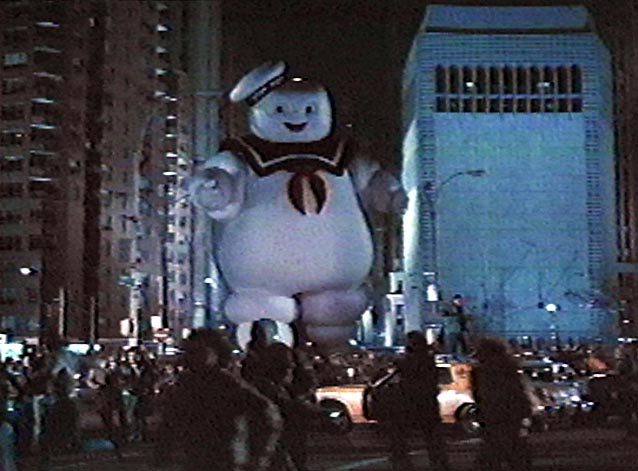
Okay, if truth be told, when reading this story I can't get the image of the the scene in ghostbusters where they fry the State Marshmallow Man. Anybody see ghostbuters? (on three, "who you goin' to call?"). But of course, in this play, the Pillowman is a lot more (deadly) serious. The Pillowman kills children before they begin leading horrible lives as adults. Again, it's this highly imaginative, in my opinion, fascinating story that gets me each time I read it. But as a metaphor, what does it mean? Is the Pillowman doing a tough but needed job--a person who can no longer live with the memories of molestation that happened to her when she was young, kills herself at 45 because her life has been awful and full of pain--well, here comes the Pilloman to save her before she becomes sad and abused. Objectively, is this a good thing (and this of course could lead to a three hour conversation). But if we table this discussion, could we maybe ask a question that I remember reading in a Stephen King book a long time ago that has stayed with me to this day--if you could go back in time and kill Hitler as a small child before he became the head of a state that killed millions of Jews, gypsies and homosexuals, would you do it? Would you be able to go back and kill a child? If we take this to a State level--what if we could find out who the eventual terrorists would be that would plant a dirty bomb in our streets? Would we be justified in arresting them now? Or, what if we believe that a state will attack us soon with nuclear or chemical weapons, would we be justified to order a pre-emptive strike? A country that has weapons that could eventually destroy us and blow us to smithereens is therefore always in the process of attacking us and therefore we are not actually attacking but defending ourselves when we invade another country?
These are of course really large questions here that I think the text, through the use of stories, is helping us think about and forcing us to question.
Good luck with the reading and I will write again........


VA - Lounge Music (2011)
14 years ago


2 comments:
I ended up finding at the Union Sq. Barnes and Noble.
Haha... for every time I read "pillowman", I pictured the same scene in Ghost Busters where he's walking through the city.
Post a Comment