Friday, October 31, 2008

Happy Halloween!!!!!!

Happy Halloween!

(i stole these jokes)

Q. What do goblins and ghosts drink when they're hot and thirsty on Halloween? A. Ghoul-aid!!!
Q. What is a Mummie's favorite type of music? A. Wrap!!!!!
Q. What's a monster's favorite bean? A. A human bean.
Q. Where does a ghost go on Saturday night? A. Anywhere where he can boo-gie.
Q. What did the skeleton say to the vampire? A. You suck.
Q. Why did the ghost go into the bar? A. For the Boos.
Q. Why was the girl afraid of the vampire? A. He was all bite and no bark.
Q. Why did the game warden arrest the ghost? A. He didn't have a haunting license.
Q. Why didn't the skeleton dance at the party? A. He had no body to dance with.
Q. Where does Count Dracula usually eat his lunch? A. At the casketeria.

Thursday, October 30, 2008

Wednesday, October 29, 2008

Readings for next week

Hey all:


Just a reminder that we will read and talk about The Pillowman next week and then move onto questions about stories created by and about graffiti.

Please see the External links page for the readings. The first reading will be an op-ed piece in the New York Times by Errol Morris who wrote (in my opinion) a fascinating analysis of a smile by Lynndie England who was part of the proceedings that happened in Abu Graib. In my opinion, The Pillowman raises many questions about the legality and the usefulness/uselessness of torture. Like everything else, it is a puzzle with no solution--we, the reader, need to figure out if the torture is (ever) justified. In the Morris piece, he does a wonderful reading of a smile and tries to understand if England is actually happy torturing these prisoners or if we cannot even trust our eyes in the photo. Please read/print it out and we will discuss it on Wednesday.

This will be our transition into our analysis of the story of graffiti. In the 21st century, writing is entering the virtual in leaps and bounds and technology is changing the way we write and read literature. But next week, we are going to analyze one of the oldest forms of writing known to mankind--graffiti. But this (illegal) practice has also been updated and the way we read graffiti is no longer just on the walls of our neighborhoods but virtually as well. So, for next week, I would like you to read an article that I am writing for an online journal entitled, “Bombing” Brooklyn: Graffiti, Language and Gentrification." It is a rough piece and still needs a lot of work but I think it is an introduction to graffiti (at least NYC graffiti) and also hits this idea about how graffiti is currently being transformed and used in ways that is very different from the way that it was intended. Please print this out and we will begin our conversations about this piece but hopefully we will get more into your ideas about writing and technology in the classroom.

I am flying tomorrow to Chicago for a conference and I will not be back until Monday. I will probably not have much access to the computer so I will not be updating my blog. But please continue to write and think through the meaning(s) of The Pillowman. Next week, I will also send you some graffiti clips that I want you to watch as well, so please keep looking at my blog for updates.

Good luck and take care!

Thoughts about The Pillowman (Part IV)

Hey all:

Some more thoughts about Martin McDonagh play.......I have been excited by your reactions so far to this play--some say that this is the most enjoyable work that you have read so far in this class. Okay, so you like plays about child murderers. No judgement here.

Act Two Scene Two
"The Little Jesus" story is another horrific, somewhat (darkly) humorous play in which a little child believes that she is Jesus and desires to go through all of the torture that the historical Jesus went through. Why is this story here? How does this have to do anything with the play? Is it just, and sorry Rob who in your post seems to be a devoted follower of the series, just like Saw or Nightmare on Elm Street or any other typical slasher film--the story is just here to show how cool a gruesome murder is? And is McDonagh just raising the stakes a bit by having the main character to be a little girl (and therefore our sympathies are prodded)?  Why does this story go right after Katurian kills his brother? Sure, it is part of the plot but why act it out?
Well, let's look at the story--in the end after all the suffering, the little girl still has belief that her torture will lead to something (a new world order which the rise of Christianity brought to the world)? And she is determined to suffer and go through it all (almost enjoying it to a certain extent). But the ending, with the scratching and clawing of the coffin shows that there is no resurrection, that the rising of the girl will not happen and the girl began to lose faith at the end and didn't trust that she was the actual Christ.  Hmm....so is this a bleak story? (um, yeah, duh.) But is there any hope in this story at all? Well, yes, there is. The real girl, Maria, wasn't the little Jesus but was actually covered in green paint and allowed to play with piglets (I know, this is a strange play). So the one story that Katurain writes that doesn't end in murder is the final story that the brother acts out. 

Why? I was happy reading this and to not see another child dead on the page (call me sentimental). But how does this fit into the greater question of the power of stories? Do bad stories in which there is death and destruction affect people to go out and act them out? In other words, do violent video games, for example, cause children to bring guns into schools and shoot people? Do nice stories cause people to do nice things?

Or is it all how you read them? The Pillowman story is actually a "nice" story to Tupolski because it allows him to get comfort when thinking about the death of his own child. It is a disturbing story to others, however, and would probably be banned from various media outlets as being dangerous. Does this play enter into a conversation, then, about the role of censorship in our society (or a totalitarian state). Do words kill? Should words be seen as dangerous as a person wielding a gun? Should we burn the stories that could lead people to harm others? Where do we draw the line?

I'm running now to get to one of the ten meetings I have today, so I have to go, but I really hope that we can sit around and talk about these large issues......see you later!   

Monday, October 27, 2008

Thoughts about The Pillowman (Part III)

some thoughts (continued).....

Act One Scene Two is a graphic and harrowing story about parent's setting up an evil experiment to see what type of literature a "loved" boy could produce while listening, for seven years, to the torture of another child in an adjacent room. Apparently, the result is that green pig stories get displaced by stories about razors in apples (if you read the play, you'll understand this last line).

And while in class, I do want to get into the story and hear your thoughts, I wish here to go back to my idea that I wrote previously about this play being a metaphor for a nation torturing its citizens (or enemy combatants) for the greater good of the nation as a whole. And I want to connect it to a question that you raised a few weeks ago--why so many stories about war and/or 9/11? Well, what type of stories are written by writers in the 21st century as smoke rises from the ashes of the world trade center or Larry King is talking about the U.S. military using water torture to extract information from suspected terrorists. What about us? When we overhear these conversations as we flip through the channels or watch SNL or John Stewart or read abstracts from newspaper articles--do these stories affect us as people? Does the fact that we know that people have been tortured or we see photos of American soldiers doing unspeakable acts in the name of our country affect the stories that we tell? Are we Katurain, living a nice life with luxuries (cell phones, new clothes, trips to the theater, dinner out) but we are still getting affected by it on another level?

Act Two Scene One The Pillowman Story

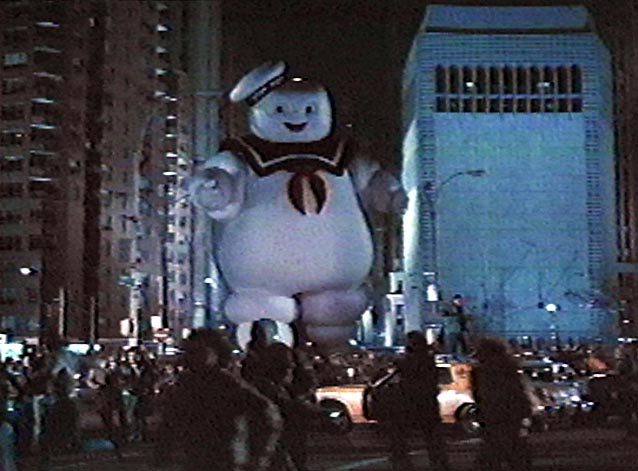
Okay, if truth be told, when reading this story I can't get the image of the the scene in ghostbusters where they fry the State Marshmallow Man. Anybody see ghostbuters? (on three, "who you goin' to call?"). But of course, in this play, the Pillowman is a lot more (deadly) serious. The Pillowman kills children before they begin leading horrible lives as adults. Again, it's this highly imaginative, in my opinion, fascinating story that gets me each time I read it. But as a metaphor, what does it mean? Is the Pillowman doing a tough but needed job--a person who can no longer live with the memories of molestation that happened to her when she was young, kills herself at 45 because her life has been awful and full of pain--well, here comes the Pilloman to save her before she becomes sad and abused. Objectively, is this a good thing (and this of course could lead to a three hour conversation). But if we table this discussion, could we maybe ask a question that I remember reading in a Stephen King book a long time ago that has stayed with me to this day--if you could go back in time and kill Hitler as a small child before he became the head of a state that killed millions of Jews, gypsies and homosexuals, would you do it? Would you be able to go back and kill a child? If we take this to a State level--what if we could find out who the eventual terrorists would be that would plant a dirty bomb in our streets? Would we be justified in arresting them now? Or, what if we believe that a state will attack us soon with nuclear or chemical weapons, would we be justified to order a pre-emptive strike? A country that has weapons that could eventually destroy us and blow us to smithereens is therefore always in the process of attacking us and therefore we are not actually attacking but defending ourselves when we invade another country?

These are of course really large questions here that I think the text, through the use of stories, is helping us think about and forcing us to question.

Good luck with the reading and I will write again........

Friday, October 24, 2008

Thoughts about The Pillowman (Part II)

Hey all:

So I have your midterms next to me and I will begin grading them shortly. Before I do, though, I do want to say that I have been impressed by the conversations that we have been having in class so far. I realize that the material that we have had so far has not been easy--and I make no apologies for this. As I stated on my syllabus, I expect us all to be intellectuals and to work through material that we may not like, may find tough, and that may find confusing. The goal of the first part of the semester was to read material that will make us think and see our post war(s) world a little bit differently. I know that I have a new understanding after listening to your comments about these texts, after seeing Blackwatch on stage, after reading your posts (so thank you). And I hope you do as well.

The second part of the semester, I hope, will be just as challenging as well as rewarding. Keep up the good work and keep fighting through these texts and bring your energy and intelligence to your posts as well as our discussions.

But now onto THE PILLOWMAN. Reading through the comments on various listserves about the play, a few words keep popping up--"brilliant" and "frightening." Well, after leaving the exam on Wednesday and hopping onto the G train to head home, I completely missed my stop because I was so wrapped up in this play. So, yeah, I agree--I think it is brilliant and frightening at the same time. But, it is also a play in which "the meaning" is just out of reach and no matter how much I stretch, it stays a fingertip away. You might find the same thing when you read. So what I will try to do a few times before our class meeting is to mention some large themes/ideas that I see and hopefully raise some interesting questions that could help you think with this material.

THE WORLD OF STORIES
Martin McDonagh is a playwright who, first and foremost, is a storyteller. He's the type of guy that you would picture in a small outoftheway pub in Ireland, sitting before a half drunk glass of Guiness and a warm peat fire, who suddenly clears his throat and two hours later after telling a fantastical story that seemed to just dance off his tongue, clears his throat again and stares at his beer never to say another word. A guy who contains many histories inside him and, given the right moment, will tell you things that you don't want to know but can't ever imagine getting up and just walking away. STORIES. The Pillowman, first and foremost, is a play that contemplates the art and nature of stories.

What does a good story do? A story contains a self-contained world that envelopes the reader/listener in a way that while s/he may feel the chair underneath her/him, there is a disconnect with the ordinary world and s/he enters completely and wholeheartedly into the world that is being created. It happens occasionally. The theater is a good place--the lights go down and the actors are mimicking opening letters (ala Blackwatch) and you know they are just actors but suddenly that doesn't matter and you are brought into the world of the fighters in Iraq. Or, for me for example, when I watched Children of Men and I forgot completely that there was anyone in the theater. Or...you get my meaning.

But a good story is not just about what it does to you in the moment of the telling. This is entertainment. Nothing wrong with that, of course, but a story must reach beyond the world it created and enter into our world. And that is what I think McDonagh does so well. I agree with Tupolski that all the stories within The Pillowman are "pointers" (17) and that they are trying to tell us something. But what are they pointing to?

Let's take the first story, "The Three Gibbet Crossroads" (17-18) where a man wakes up in a gibbet, knows he did something wrong, but doesn't know what. His crime is on a placard above the cage and so he cannot see what he did wrong. People pass by and everyone who sees him is disgusted by him (two other prisoners--a rapist and a murderer are forgiven by the passerbys) and eventually one even kills the man. Before he dies, the man wants to know if he will go to hell but he is just laughed at as his life drains from him.

Katurain says that this story is a great story because it is a puzzle without a solution.

Okay, so what do we do with this? Well, one, we look at the story aesthetically and, yeah, it's a good story. It gave me a few chills and will probably keep me up tonight. But on another level, I do think it's pointing to something as well. But what? Well, why is this guy in prison in the first place---because he did something horrible and is punished for it. But do we know this for sure? We, the audience, don't know his crime--or if he did anything at all. And the people--the nuns, the highway man--are disgusted by what the sign says. But did they see him do the crime (whatever crime it is)? No. All we know is that there is some power that was able to arrest, try and convict the man without any say on his part. He had no power of attorney, he had no defense, hell, he doesn't even know what he did. But as his life is spilling from him, he is convinced that he did something wrong and wonders about his eternal soul.........this sounds to me as a metaphor for a prison system in a State where people have no rights. A prison system where people are arrested without formal charges and are not given a chance to defend themselves. They are outside the law and therefore are not even able to get sympathy from passerbys. They are convicted and therefore seen as ultimate danger to the State and its subjects and therefore they have to be locked up and sent away (in this case forever).

Does this sound like anything we know? Is this story, a puzzle with no solution, actually pointing to our current post 9/11 world where governments have places outside of the law where, for the safety of the State's subjects, they are outside of all normal laws and legal processes? A place like Guantanamo Bay perhaps?

Is this play really a frank and brutal story about a world where governments are sanctioned to torture in order to protect? A play about what happens when laws are pushed aside for "national security?"

Maybe, maybe not, but as you read this play, think about what all of these stories point to? Who are the defenseless children in these stories? What do the two brothers represent? How is torture used in this story?

Anyway, that's probably too much for one sitting. I'll stop here. But I'll try to get some more ideas out here on my blog tomorrow.......

Thursday, October 23, 2008

Some initial thoughts about The Pillowman

Hey all:

Okay, so we are moving away from memoirs and plays and graphic novels about war and instead we are moving to . . . a play about child murderers?!?!

Yes, The Pillowman is about two brothers who are being accused and interrogated by two policemen for the gruesome murders of two children and the disappearence of the third. It seems as if one brother is a writer and many of his stories deal with kids who get killed...in many of the same ways that actual kids get killed.

So part of the pleasure (and yes, I say pleasure) of reading this play is to try to figure out if the brothers did it or not. And the play (in my opinion) is so well written that there are moments where I just want to put the book down in horror but many others where I actually laugh at a really funny line or forget about the play entirely and just get lost in the actual story that one of the characters recite. Again, not an easy read at all but a very interesting one.

But, and maybe more than any other work that we have read before, this is NOT a play that you can just read for plot or the surface meaning. Katurain (one of the brothers) says, "the first duty of a storyteller is to tell a story" (7), and Martin McDonagh certainly has told a whopper of one. But Tupolski (a detective) wants to know what these stories represent.

And that is our job as readers. What are these stories about--yes, they are about child murders but what do they represent? How are the issues in the stories related to issues in our current political climate?

In the next few days, I'll keep posting some of my ideas that may or may not help you work through this text. BUT YOU NEED TO PUSH YOURSELF. Don't be content to just listen (horrified) by the stories that are told but rather, always take a step back and wonder what large issues are being brought up.

Good luck and I look forward to hearing your thoughts next class.

Take care.